Learning how to downsize before a move reduces your shipping weight and total costs, which for move from Hawaii and to Hawaii can save you thousands of dollars. Starting the process early gives you time to decide what to ship, what to sell, and what to leave behind before your belongings are inventoried or quoted.
In This Article
- Introduction
- When to Start the Downsizing Process
- Building a Downsizing Plan Room by Room
- Sorting and Decluttering Your Belongings
- Selling, Donating, and Disposing of Items
- Why Downsizing Matters More for a Hawaii Move
- Plan Your Move With Royal Hawaiian Movers
When to Start the Downsizing Process
For a Hawaii move, give yourself at least eight to twelve weeks to sort, sell, and donate before your moving date. Larger households or those with family members sharing in the sorting process should start closer to the twelve-week mark to avoid rushed decisions that end up costing more at shipment time.
Before you start sorting rooms, planning your relocation with a moving budget checklist helps you set realistic cost expectations before a single box gets packed.
Building a Downsizing Plan Room by Room
Tackling one room at a time keeps the process organized and prevents sorted items from getting mixed back into your general household before they’re removed. Starting with the areas that consistently accumulate forgotten or underused items helps identify quick shipping weight reductions early in the process:
The Kitchen and Pantry
Expired pantry goods, duplicate gadgets, and appliances used once a year add unnecessary weight to your shipment without adding value to your new home. The kitchen is a good first stop since cuts here are straightforward and free up space in your load before you reach the harder sorting decisions in other rooms.
Closets and Storage Spaces
Clothing unworn for a year or more, seasonal gear, and boxes that have sat untouched are the first things to cut from your shipment. These spaces tend to accumulate items you’ve forgotten about—and forgotten items are rarely worth the cost of shipping across the ocean.
Living Areas and Bedrooms
Furniture and décor are the hardest items to cut, though larger pieces that are costly to ship are often easy to replace on the island. Bringing a family member into the sorting process for these rooms helps keep decisions moving without getting stuck on sentimental items.
The decisions you make before shipping household goods to Hawaii directly affect what you pay when your shipment is weighed and quoted.
Sorting and Decluttering Your Belongings
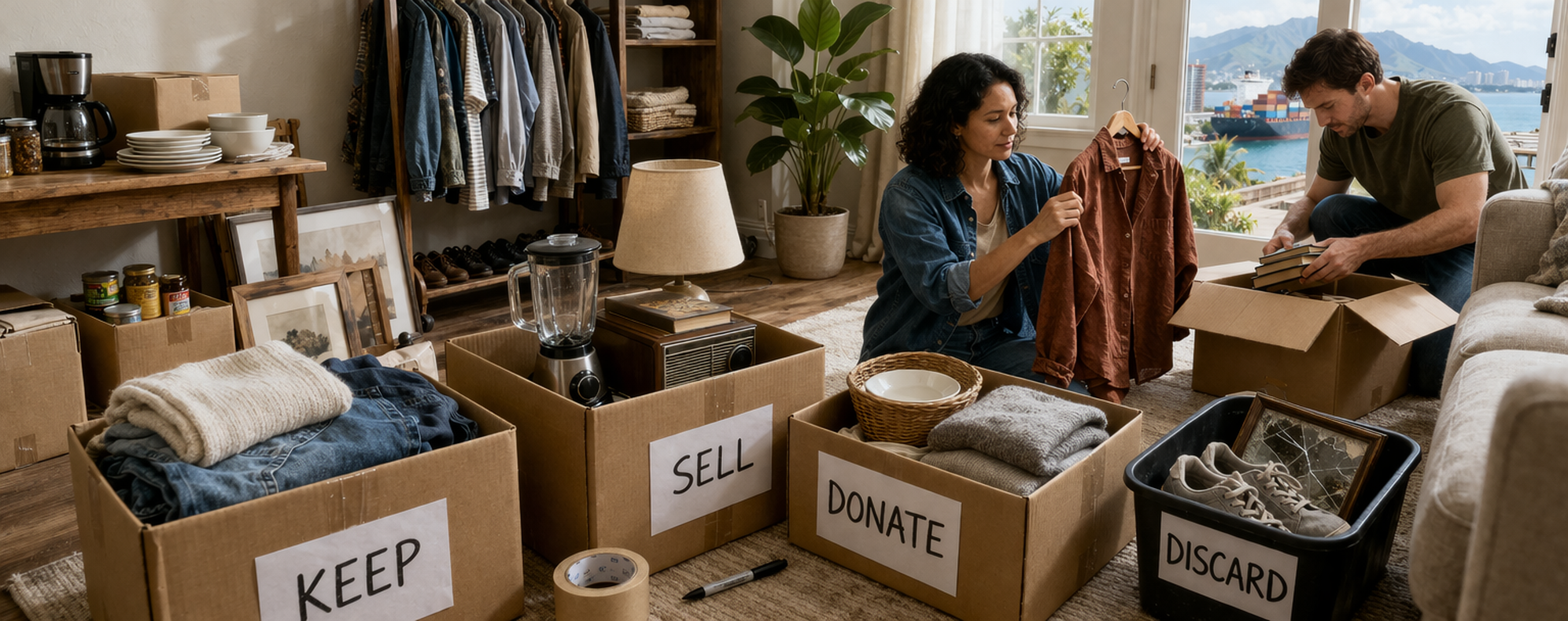
Sorting every item into keep, sell, donate, or discard gives it a clear destination and prevents undecided belongings from slowing down your timeline. Set up a dedicated staging area so that sorted items leave your living space immediately rather than getting folded back into the household.
- Keep: Items you use regularly and are worth the cost of shipping to Hawaii.
- Sell: Furniture, appliances, and household goods in good condition that can offset your moving costs.
- Donate: Usable items that didn’t sell, including clothing, kitchenware, and furniture.
- Discard: Worn-out, broken, or expired items with no resale or donation value — including any documents with personal information, which should be shredded rather than boxed and transported.
Selling, Donating, and Disposing of What You’re Not Shipping Overseas
Items that don’t make the cut still have options worth pursuing before your move date. A few of the most common ways to handle what you’re leaving behind:
Hosting a Garage Sale
A garage sale is one of the quickest ways to turn unwanted household goods into money you can put toward your move. Price items to sell fast, promote through neighborhood apps and local listings, and schedule it at least four to six weeks out to leave time for a donation run with whatever doesn’t sell.
Estate Sales for Larger Volumes
An estate sale is a good fit when you have large quantities of furniture, antiques, or household goods to move before your shipping date. Professional estate sale companies handle pricing, promotion, and day-of management, making them a lower-effort option than running a garage sale yourself when the volume of items is high.
Consignment Shops and Online Selling
Consignment shops are a good option for furniture, clothing, and décor in good condition; drop off eligible items, and they handle the selling while you focus on packing. For higher-value pieces, online platforms tend to return more money but take more of your time to manage listings and coordinate pickups before your move date.
Donating What Remains
Local charities, shelters, and nonprofit organizations accept household items, clothing, and furniture that didn’t sell through a garage sale, estate sale, or consignment shop. Donation receipts are often tax-deductible, so ask each organization for written documentation before your move date.
Why Downsizing Matters More for a Hawaii Move
Mainland moves offer some flexibility when it comes to last-minute decisions about what to bring. If you underestimate your load, the cost adjustment is usually manageable. Hawaii moves work differently. Ocean freight is priced by weight and volume, so every item that makes it onto your shipment has a direct cost attached to it. There is no easy fix once your belongings are loaded and on the water.
Downsizing before your shipment is inventoried and quoted is one of the few moments in the moving process where you have full control over what you spend. If you downsize properly you may be able to open up new move options like our EZ Move service. It also gives you a cleaner start in your new home rather than arriving with boxes full of things you meant to deal with before you left.
Plan Your Move With Royal Hawaiian Movers
Royal Hawaiian Movers has terminals on Oahu, Maui, Kauai, and the Big Island, with over 40 years of experience handling local, neighbor island, and international relocations. Get a quote today and let Hawaii’s largest mover handle the heavy lifting.