Updated: June 5, 2026
Some people will tell you that Hawai'i is one of the best places to retire in the U.S. Many retirees are lured to the islands by Hawai'i's year-round balmy temperatures and postcard-perfect tropical landscape. In fact, Kiplinger named Hawai'i the second-best state to retire in, citing its low health care costs and high life expectancy for residents.
However, you'll find plenty of divergent opinions on the topic. WalletHub placed Hawai'i #41 in its list of best and worst states to retire in. Hawai'i
Retiring in Hawai‘i: Rankings by Major Publications
Let’s start with the good stuff!
Retiring in Hawai‘i Pro: Perfect Weather
It’s a climate that’s practically made for Goldilocks. It’s rarely too hot, rarely too cold, and most often just right.
Unlike a place like Boca Raton, Florida where summers come with brutally hot temperatures reaching 90°+, Honolulu summers are significantly cooler, with highs in the low 80s. Winter nights in Honolulu can even be as cool as the high 50s, giving you a break from the warmth of the day.
Plus, you’ll also enjoy Hawai‘i’s year-round tradewinds, which means there’s an almost-constant gentle breeze blowing. This makes life without air conditioning pretty comfortable for most of the year in a number of locations in Hawai‘i. (Can you imagine living without A/C in Florida? We can’t!)
Retiring in Hawai‘i Pro: The Laid-Back and Pleasant Island Lifestyle
The Aloha State isn’t just a nickname. It’s a way of life—a level of care, respect, and kindness people pay to each other in Hawai‘i. It makes Hawai‘i a pleasant place to live, and it makes Hawaii a good place to retire for many.
| In fact, Hawai‘i was named the healthiest and happiest state seven years in a row in Gallup’s National Health and Well-Being Index from 2012–2019. If you’re a retiree looking for an enjoyable environment for the later years of your life, Hawai‘i might just fit the bill. Hawai‘i is also a place that moves at its own, leisurely pace. Retirees who are tired of the hustle-bustle of their current location will welcome the more relaxed timeline of the Hawaiian islands. |
The 11 Best Places to Retire in Hawai‘i
We’ll show you the 11 best spots for seniors retiring in Hawai‘i. You’ll find options on Oʻahu, Maui, Kauaʻi, and the Big Island.
Retiring in Hawai‘i Pro: Health Advantages
Health and health care are big issues for retirees, and Hawaii puts up some pretty good numbers in that regard.
Life expectancy in the state is the highest in the nation at at 77.6 years for males and 83.6 for females. Plus, if you’re concerned about what kind of healthcare is available in Hawai‘i, US News ranked Hawai‘i #1 in health care quality and #4 in health care access, making it a good place to retire.
#1
Life Expectancyin the U.S. at 86.5 years
#3
Lowest Poverty RateFor ages 65+ in the U.S.
#1
Health Care AccessUS News Rating
#1
Health Care QualityUS News Rating
Retiring in Hawai‘i Pro: Safety of Life on the Island
Retirees who are concerned about safety in the Hawaiian Islands shouldn’t worry too much. The website Consumer Affairs ranked Hawai‘i right in the middle of the pack, as the 25th safest state in the nation, based on factors such as violent crime rates, property crime rates, driving safety, the number of law enforcement officers per capita, and climate safety. One big positive is Hawai‘i’s low violent crime rate, the 8th lowest in the U.S.
The website HomeSnacks takes a slightly more optimistic view of Hawai‘i, ranking it the 11th safest state. Their analysis, which leveraged FBI crime data, ranked Florida, another popular destination for retirees, at #16—just to offer some perspective!
Retiring in Hawai‘i Pro: Some Tax Advantages
Although Hawai‘i isn’t necessarily a tax-friendly state overall (more on that in the next section!), it does have a couple of unique tax features that can benefit retirees.
Retiring in Hawai‘i Pro: It Doesn’t Get More Gorgeous Than This

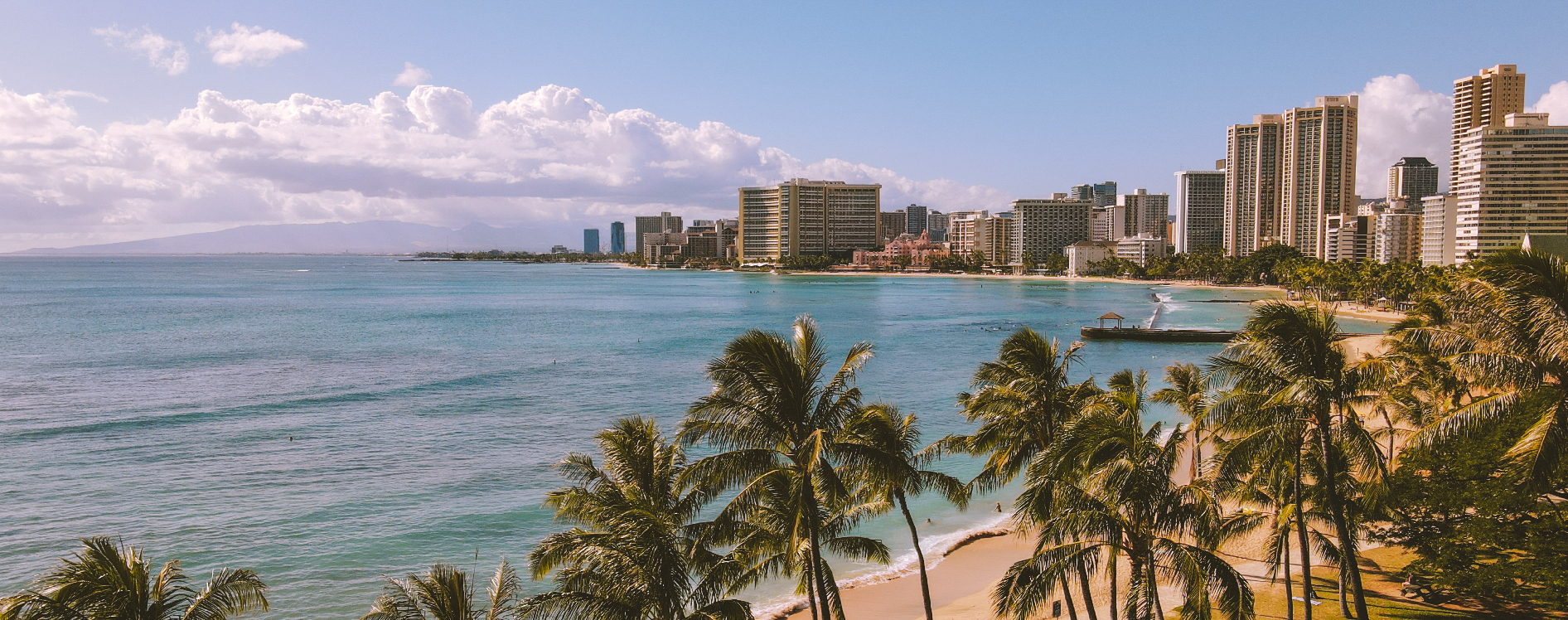
Looking out at a beautiful landscape has a way of lifting your spirits, and you’ll enjoy some of the most amazing vistas the U.S. has to offer in Hawai‘i. From picture-perfect beaches, to lush rainforests, to majestic waterfalls, to towering volcanoes, and even daily rainbows, Hawai‘i has it all.
For this reason alone, many seniors consider Hawai‘i a good place to retire.
Now that we’ve run you through all the upsides to retiring in Hawai‘i, we want to share a few of the challenges so you can make a well-considered decision.
Retiring in Hawai‘i Con: The High Cost of Living
We’ve written about it extensively, but it deserves repeating: The cost of living in Hawai‘i is significant. USA Today, the website Lifehack and the Missouri Economic Research and Information Center (MERIC) all named Hawai‘i the most expensive state to live in.
Just to give you a sense of what that means, MERIC’s recent cost-of-living index ranked Hawai‘i first in the U.S. for most expensive groceries, housing, transportation, health, and utilities.
#1
Groceriesmost expensive in the U.S.
#1
Housingmost expensive in the U.S.
#1
Utilitiesmost expensive in the U.S.
#1
Transportationmost expensive in the U.S.
So how do seniors make it work when they retire in Hawai‘i? One thing many retired couples do is rent out a part of their house or their ‘ohana, a separate cottage that you’ll find on many properties in Hawai‘i. This rental income offers many retirees in Hawai‘i some extra income to help defray the cost of retiring in an expensive state.
How Much Money Do You Need to Retire in Hawai‘i?
$129,000/year
to retire comfortably in Hawai‘i
$3.23 million
savings, using the 4% rule
If you’re budgeting for the cost to retire in Hawai‘i, Visual Capitalist suggests you’d need $129,000 per year to retire comfortably. That number includes a 20% comfort buffer (~$21,500) to ensure a low-stress retirement.
Using the 4% rule, that comes out to a retirement nest egg of $3.23 million to retire in Hawai‘i. Keep in mind that there are plenty of different philosophies and retirement calculators for figuring out the finances of retirement. Use these numbers as benchmarks for your own research and retirement planning as you budget for the cost to retire in Hawai‘i.
Retiring in Hawai‘i Con: Tax Disadvantages
We mentioned earlier that there are a few tax advantages to retiring in Hawaii. These are balanced by a few tax disadvantages:
Hawai‘i has one of the highest state tax burdens, especially for residents in its highest tax brackets. Single taxpayers who make more than $200,000 are looking at a payment of $16,379 (effectively 8.18%) plus 11.00% on any income in excess of $200,000.
Hawai‘i State Tax Burden
| Taxable Income (Line 26 on Form N-11) | Hawai‘i State Tax |
|---|---|
| Over $24,000 but not over $36,000 | $ 1,354 plus 7.60% over $24,000 |
| Over $36,000 but not over $48,000 | $ 2,266 plus 7.90% over $36,000 |
| Over $48,000 but not over $150,000 | $ 3,214 plus 8.25% over $48,000 |
| Over $150,000 but not over $175,000 | $ 11,629 plus 9.00% over $150,000 |
| Over $175,000 but not over $200,000 | $ 13,879 plus 10.00% over $175,000 |
| Over $200,000 | $ 16,379 plus 11.00% over $200,000 |
Additionally, according to WalletHub’s calculations, Hawai‘i’s sales and excise tax burden is the highest in the country. These taxes can take a real bite out of your bank account. (Note that, although Hawai‘i doesn’t have a sales tax, it does have what’s called a general excise tax (GET), which often gets passed along to consumers.)
In other words, make your tax calculations carefully before you decide to retire in Hawai‘i.
Retiring in Hawai‘i Con: You’re Going to Need a Car
Hawai‘i doesn’t have too many big cities to speak of outside of Honolulu. As such, public transportation is more limited than you’ll find in other urban areas in the U.S.
O‘ahu, the Big Island, Kaua‘i, and Maui do have their own bus system. However, if you really want to get around the islands, you’re likely going to need a car.
As a Retiree, Should I Ship My Car to Hawai‘i?
We’ll answer your biggest questions about shipping your car to Hawai‘i, including whether you should ship it or sell it at your current home.
[Read More]
While this may not be a problem for those in the early stages of their retirement, this can get tricky as retirees get older. As eyesight wanes and reflexes slow, you may not want to be behind the wheel as often as you were in your younger years.
That’s why this next one can make or break your retirement possibilities.
Retiring in Hawai‘i Con: You’ll Be Far from Friends and Family
As you get older, having friends and family around is both a comfort and a necessity. When you want some companionship, need a hand with something around the house, or could use a ride to pick up a prescription late at night, it’s really nice to have someone you can count on.
In Hawai‘i, that Aloha Spirit means that you’ll likely find neighbors who are willing to help out. Caring for and respecting elders is an important tradition to many of the cultures who have settled in Hawai‘i, including native Hawaiians and those who hail from places like China, Korea, the Philippines, and Japan.
Some lucky retirees move to Hawai‘i to reunite with their families and enjoy a built-in support system. However, if you’re moving to Hawai‘i without any close ties in the islands, you’ll want to consider what life might be like should you need help. You’ll likely make friends quickly, but you’ll also have an easier transition if you already have trusted people in place.
Retiring in Hawai‘i Con: Possibility for Extreme Weather
Extreme weather has become more of a concern around the globe, and Hawai‘i has its own share of potential threats. As a resident of Hawai‘i, you’ll need to keep an eye out for:
Retiring in Hawai‘i Con: Health Care Access on Outer Islands
Finally, just a quick note on health care access on Maui, Kaua‘i, and the Big Island.
Even though US News rated Hawai‘i #4 in terms of health care access, you’ll have access to the widest variety of facilities, providers, specialists, and specialty equipment on O‘ahu.
If you have a specific medical condition that requires specialized care or facilities, make sure to do your research before choosing an island in Hawai‘i. Of course, frequent interisland flights are available through Hawaiian Airlines, Mokulele Airlines, and Southwest Airlines. If you don’t mind flying to Honolulu for treatment, it’s pretty quick and easy to get there.
Your 7-Point Checklist for Moving to Hawai‘i
When you’re ready to retire to Hawai‘i, we’ll help you make a simple move with our 7-point checklist for seniors.
[Read More]
Frequently Asked Questions About Retiring in Hawai‘i
Retiring in Hawai‘i: Welcome to Paradise
In many ways, Hawai‘i is a retiree’s dream: a beautiful location with perfect weather, pleasant people and a slow, laid-back style of living. However, as you’ve seen, even paradise has its problems.
Now it’s up to you to decide: Will retiring in Hawai‘i be a dream come true for you—the perfect place to spend your golden years? Or is there another place that might be a better fit? With all the pros and cons laid out for you, you’ve got everything you need to make the right choice.
Need some help relocating to Hawai‘i? Our experts would be happy to help you move all of your household belongings to Hawai‘i. We specialize in senior relocations, and we can even do all the packing and lifting for you! Just reach out to one of our experts for a free quote to get started.