October 31, 2022By: mcameron
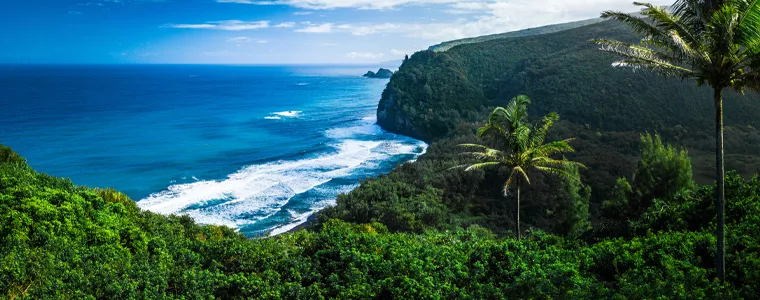
Should the south Kona community be called “Captain Cook” or its original Hawaiian name, Ka’awaloa? That was the question surrounding Hawaii House Concurrent Resolution 27, a measure to change the name of the community named for the 1900s post office established by the Captain Cook Sugar Company. Although this particular resolution didn’t make it out of the state Senate Committee on Public Safety, Intergovernmental, and Military Affairs, it highlights a topic that’s gotten more traction lately in Hawaii: restoring Hawaiian place names. When Mary Kawena Pukui, Samuel H. Elbert, and Esther T. Mookini wrote their 1976 edition of Place Names of Hawaii, they estimated that...
Read MoreOctober 24, 2022By: mcameron
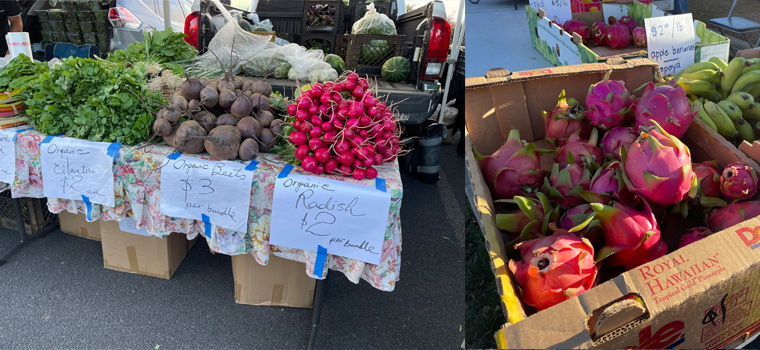
Although Hawaii is no longer an agricultural powerhouse, the market for locally grown produce is still alive and well in the Aloha State. Nowhere is this more evident than in the farm stands and farmers’ markets you’ll find all over Hawaii. To give you a sense of what you’ll find at one of Hawaii’s many farmers’ markets, we headed to the Upcountry Farmers’ Market on Maui. This Saturday market is one of Maui’s biggest and most popular, and it’s been operating in some form or another for 40+ years. Currently, it’s held on Saturday mornings from 7:00 am to 11:00 am at the Kulamalu Town...
Read MoreOctober 17, 2022By: mcameron
Hawaii residents speak more than 130 languages. Among that list is Pidgin, officially recognized as Hawaiian Pidgin English by the Census Bureau. Pidgin originated as a way for waves of immigrants from China, Japan, Korea, Portugal, the Philippines, Europe, and other origin points to communicate with Native Hawaiians and each other once they arrived in Hawaii. According to census data, more than 1,200 Hawaii residents speak Pidgin at home today. You’ll also hear Pidgin words and phrases sprinkled into everyday conversation all over Hawaii. Now, if you didn’t grow up speaking Pidgin, we don’t suggest you start now. (Trust us on this one.) However, if...
Read MoreOctober 10, 2022By: mcameron
As you spend time in Hawaii, you’ll hear certain Hawaiian words over and over again: mahalo (thank you), aloha (used for “hello” and “goodbye” but also carries a deeper meaning), kokua (help), e komo mai (welcome), ohana (family)—and pono. Like many words in the Hawaiian language, the full meaning of pono is complex. And like aloha, it doesn’t have a simple English equivalent. However, after great consideration, researcher and scholar Malcolm Naea Chun named pono the greatest Hawaiian value. As such, it’s a word—and a concept—that’s more than worthy of further exploration. In this article, we’ll explore the complex meaning of pono. We’ll also offer...
Read MoreOctober 10, 2022By: mcameron
Today, many people know Hawaii as the 50th state. However, if you know your history, you’d also recognize the fact that the Hawaiian Kingdom was formerly an independent monarchy. It was overthrown by a coup d’etat in 1893, annexed by the United States in 1898, and administered as a U.S. territory until it became a state in 1959. Looking even further back into Hawaii’s history, the islands were settled as early as 400 CE, when initial voyagers from the Marquesas Islands arrived to the island chain. By the time Europeans arrived in Hawaii in the late 18th century, the native Hawaiians they encountered had spent...
Read MoreOctober 3, 2022By: mcameron
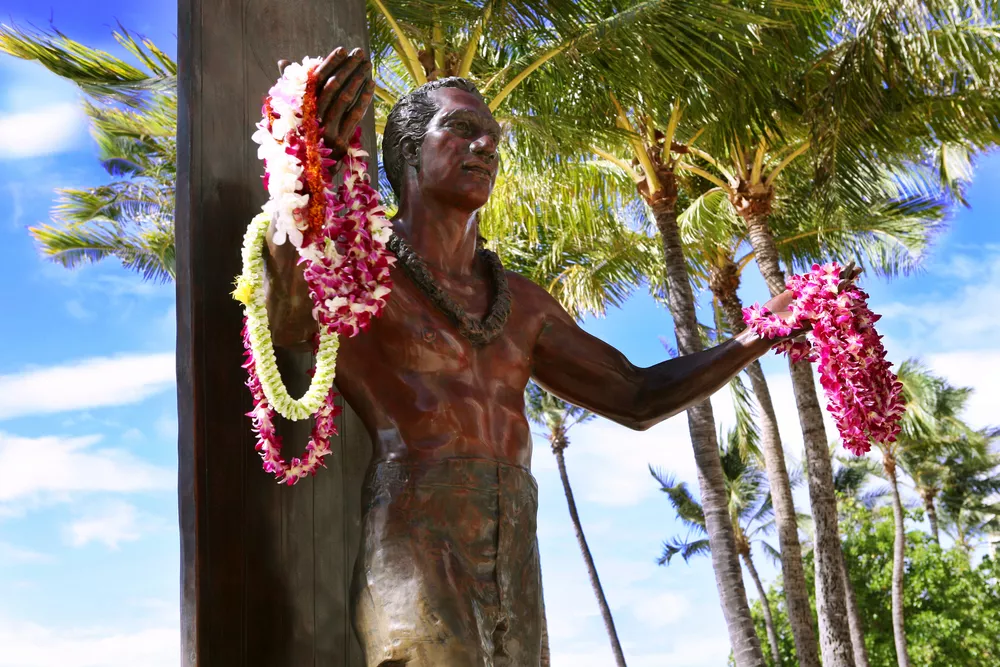
Hawaii has long been recognized as the capital of surfing. Accounts written by Europeans who visited the Hawaiian Islands in the late 18th century described this pastime, which, like many aspects of Hawaiian society, was significantly stratified. Hawaii’s royalty enjoyed long boards made of wiliwili trees—as well as priority on waves. Commoners’ boards were made of koa wood. If a commoner dropped in on one of the alii—or stole a wave—it was a serious violation, punishable by death. Given this long history—and the plethora of surf breaks in Hawaii—it’s no surprise that the state turns out a considerable number of talented surfers, some of whom...
Read More